
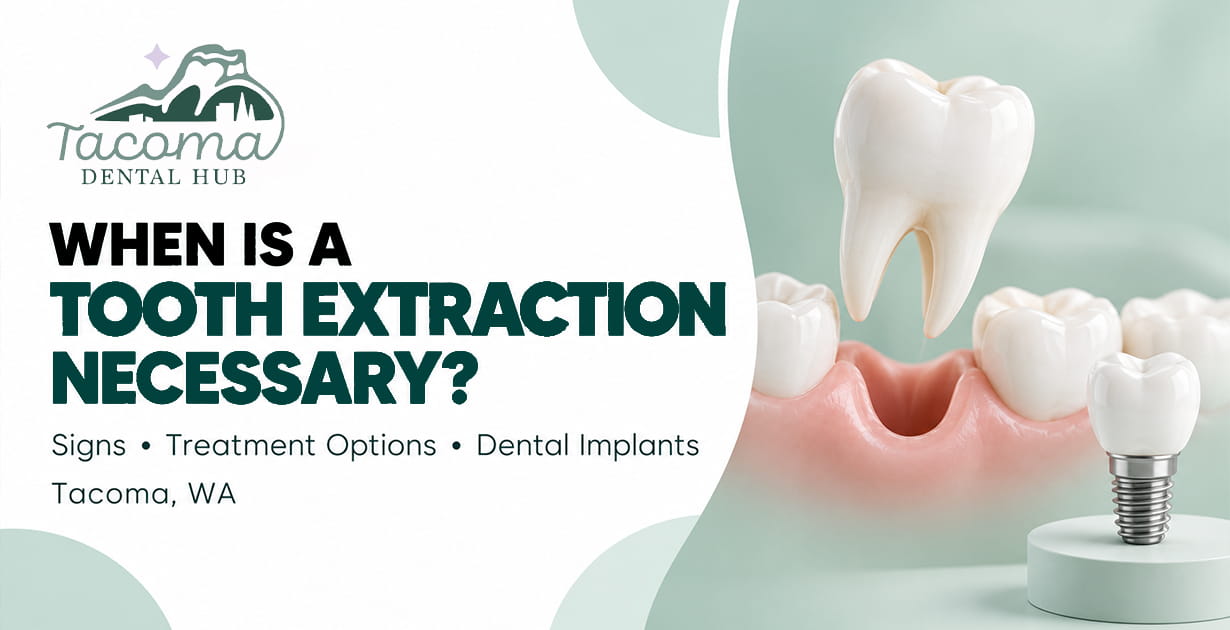
If you are considering a tooth extraction in Tacoma, WA, understanding why dentists recommend the procedure, what alternatives may be available, and how to plan for recovery can help you make a more informed decision.
What Is a Tooth Extraction?
A tooth extraction is a dental procedure in which a dentist removes a tooth from its socket in the jawbone. Extractions may be recommended for several reasons, including extensive tooth decay, severe fractures, advanced gum disease, or problems involving impacted wisdom teeth.
There are two main types of tooth extraction.
Simple extraction: This procedure is generally used when the tooth is visible above the gumline and can be removed without extensive surgical access. The dentist loosens the tooth and carefully removes it from its socket.
Surgical extraction: This may be necessary when a tooth is broken at the gumline, has not fully erupted, or cannot be removed easily through a simple extraction. The procedure may involve an incision in the gum and other steps to access the tooth.
The type of procedure depends on the tooth’s position, condition, and surrounding anatomy. A dental examination and, when appropriate, dental X-rays help determine the safest approach.
5 Signs You May Need a Tooth Extraction
Not every painful or damaged tooth needs to be removed. However, certain conditions may make extraction necessary.
1. Severe Tooth Decay
Tooth decay develops when bacteria and acids gradually damage the hard tissues of a tooth. When decay is identified early, a filling may be sufficient to restore the affected area.
If the decay becomes extensive and destroys too much of the tooth’s structure, restoring it may become difficult. In some cases, the dentist may recommend extraction if the tooth cannot be predictably repaired.
Regular dental examinations can help identify cavities before they progress to this stage.
2. A Broken or Severely Cracked Tooth
Teeth can fracture because of accidents, biting hard objects, untreated decay, or repeated pressure during chewing.
Some damaged teeth can be restored with a dental crown, while other cases may require root canal treatment followed by a suitable restoration. However, if the fracture extends too deeply below the gumline or into the root, saving the tooth may not be possible.
If you have a broken tooth, avoid chewing on the affected side and arrange a dental assessment promptly.
3. A Serious Dental Infection
An infection inside a tooth can cause persistent pain, sensitivity, swelling, or discomfort when biting. If bacteria reach the dental pulp, root canal treatment may help preserve the tooth in suitable cases.
However, if the tooth is too damaged to restore or the infection cannot be managed while retaining it, extraction may be recommended.
Swelling accompanied by fever, worsening pain, or facial swelling requires prompt professional evaluation. Difficulty breathing or swallowing, or rapidly spreading swelling, requires immediate emergency medical care.
4. Advanced Gum Disease
Periodontal disease affects the gums and the structures supporting the teeth. In advanced cases, the supporting bone may deteriorate, causing teeth to become loose.
Depending on the extent of the damage, periodontal treatment may help manage the condition. If a tooth has lost too much support and cannot be maintained, removal may be necessary.
Treating gum disease and maintaining good oral hygiene are important whether or not extraction is required.
5. Impacted or Problematic Wisdom Teeth
Wisdom teeth are the last molars to emerge, usually during the late teenage years or early adulthood. Sometimes, there is insufficient room for them to erupt properly.
An impacted wisdom tooth may cause pain, swelling, repeated gum infections, or damage to an adjacent tooth. In other cases, impacted wisdom teeth may not cause symptoms.
Not every wisdom tooth needs to be removed. A dentist can evaluate its position, condition, and potential risks to determine whether monitoring or extraction is appropriate.
Can a Tooth Be Saved Instead of Extracted?
Before removing a natural tooth, it is worth discussing whether a restorative treatment could preserve it. The answer depends on how much healthy tooth structure remains, the condition of the root, the supporting bone, and other clinical factors.
Dental Fillings
A filling may be suitable when decay has damaged a limited portion of the tooth. The dentist removes the decayed material and restores the affected area with a filling material.
This option is generally more appropriate when enough healthy tooth structure remains to support the restoration.
Root Canal Treatment
When the dental pulp becomes inflamed or infected, root canal treatment may allow the dentist to preserve the natural tooth. The affected pulp is removed, the inside of the tooth is cleaned, and the space is sealed.
A crown may be recommended afterward, depending on the amount of remaining tooth structure and the tooth’s location.
Learn more about root canal treatment in Tacoma to understand how this procedure may help preserve a tooth that would otherwise require removal.
Dental Crowns
A dental crown covers a damaged or weakened tooth to restore its shape, function, and strength. Crowns may be appropriate when a tooth has extensive decay, a significant fracture, or a large existing restoration.
However, a crown cannot save every damaged tooth. The dentist must determine whether enough healthy structure remains to support it.
You can explore dental crowns in Tacoma to learn more about this restorative option.
What Happens During a Tooth Extraction?
If extraction is necessary, your dentist will first examine the affected area and review any relevant X-rays. They will explain the procedure, discuss anesthesia options, and answer questions about the expected recovery.
During a simple extraction, the dentist numbs the area with local anesthesia, loosens the tooth, and removes it from the socket. For a surgical extraction, additional steps may be required depending on the tooth’s position and condition.
You may feel pressure during the procedure, but local anesthesia is intended to minimize pain. Tell your dentist if you experience significant discomfort.
After the tooth is removed, a blood clot forms in the socket. This clot is important for healing, so your dentist will provide instructions to help protect it.
If you need further information, visit the tooth extraction services page at Tacoma Dental Hub.
How Can You Recover After a Tooth Extraction?
Recovery varies depending on the complexity of the extraction, your general health, and the tooth involved. Many people experience mild swelling, tenderness, or discomfort during the first few days.
To support healing:
- Follow your dentist’s aftercare instructions carefully.
- Bite gently on the gauze provided if instructed to control bleeding.
- Eat soft foods initially and gradually return to your usual diet as comfortable.
- Avoid smoking and vaping, which can interfere with healing.
- Do not use straws or spit forcefully during the initial healing period if advised to avoid disturbing the blood clot.
- Brush your teeth carefully while avoiding direct injury to the extraction site.
- Take prescribed or recommended medication according to your dentist’s instructions.
Contact your dentist if bleeding does not settle, pain becomes significantly worse, swelling increases, or you develop a fever. Severe pain developing a few days after extraction can sometimes indicate dry socket or another complication that requires professional assessment.
What Happens After a Tooth Is Removed?
An extraction may resolve the immediate problem, but the next step depends on the location of the missing tooth, your oral health, and your personal preferences.
Leaving a gap can affect chewing and appearance. In some situations, neighboring teeth may shift over time, and missing teeth can contribute to changes in how your bite functions.
Your dentist may discuss several replacement options.
Dental implants: An implant is placed in the jawbone and supports a replacement tooth. Suitability depends on factors such as bone health, gum condition, medical history, and the healing of the extraction site.
Dental bridges: A bridge replaces a missing tooth by supporting an artificial tooth using neighboring teeth or other suitable structures.
Dentures: Depending on the number and location of missing teeth, a partial or complete denture may be an option.
Replacement is not always required immediately after extraction. The appropriate timing depends on the condition of the site and your treatment plan.
If you are considering an implant, explore dental implant services in Tacoma to learn more about tooth replacement and the factors involved in treatment planning.
When Should You Contact an Emergency Dentist in Tacoma?
A damaged tooth does not always require emergency treatment, but certain symptoms should be evaluated promptly.
Contact a dentist if you have severe or persistent tooth pain, a broken tooth, swelling around the gums or face, or signs of a dental infection. If a permanent tooth has been knocked out, seek urgent dental care immediately because treatment may be time-sensitive.
If you experience difficulty breathing or swallowing, rapidly spreading facial or neck swelling, or other serious symptoms, seek emergency medical care immediately.
For urgent dental concerns, visit Tacoma Dental Hub’s emergency dental services page to learn how to contact the practice.
Get Advice About Tooth Extraction in Tacoma
A painful or damaged tooth does not automatically mean you will lose it. In many cases, treatment can preserve the natural tooth. When extraction is necessary, understanding your options can help you plan for recovery and maintain your oral health.
Tacoma Dental Hub serves patients in Tacoma, Washington. If you are experiencing tooth pain or have been advised to consider an extraction, contact the practice to discuss your concerns and arrange an assessment.
Call (253) 352-9194 or visit Tacoma Dental Hub’s contact page to inquire about an appointment.
